Best Podcast Microphone: Vintage vs Modern Shootout
By Luis Cabrera • 30th Nov
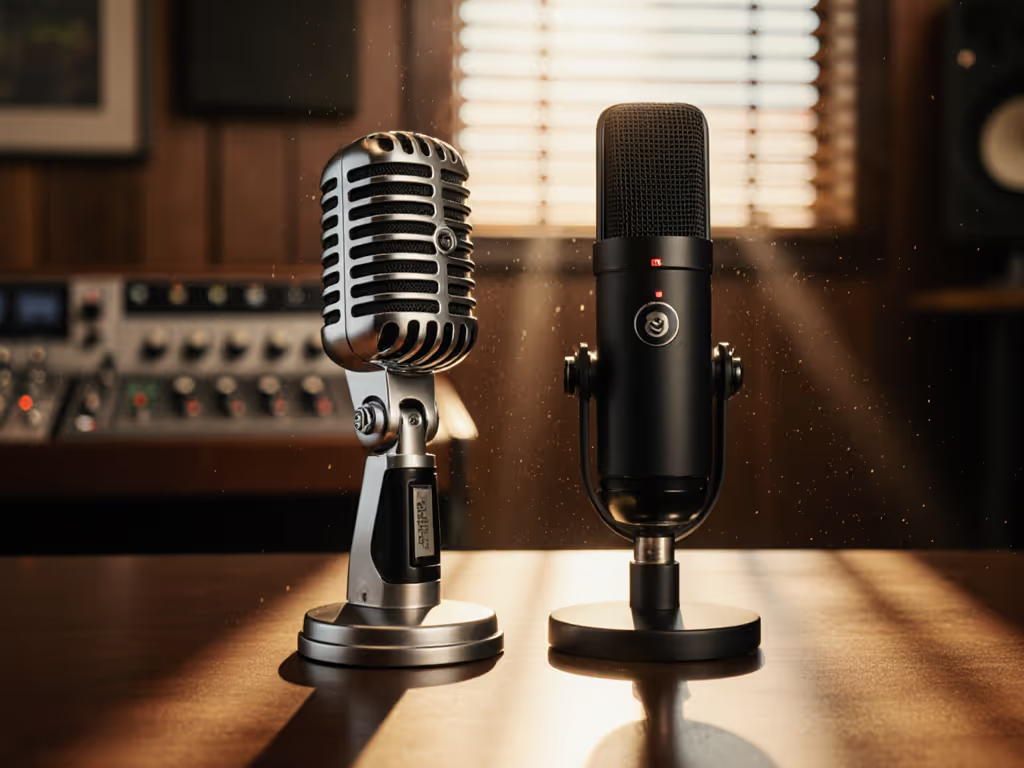
When producers ask for the best podcast microphone that won't become obsolete next year, I think back to that newsroom shoebox (creaky arm, mismatched mounts, and two USB mics destined for future XLR use). Today's modern vs vintage audio debate isn't about nostalgia; it's about building setups that survive noisy home offices and budget cuts. Forget chasing mythical 'vintage warmth.' Let's dissect what actually matters in your untreated room: durability, noise rejection, and whether that mic plays nicely with your $99 interface. I've stretched pennies for nonprofits and podcast teams for 15 years. Trust me, smart sequencing beats shiny specs every time.
Why Your Room Hates 'Classic' Microphone Shootouts
Most vintage vs modern comparisons ignore room reality. For fixes that matter more than the mic, see our room acoustics guide. They demo mics in treated studios with $10,000 preamps, then you buy the 'legendary' SM7B and drown in HVAC noise. Real podcasters wrestle with:
- Untreated walls amplifying plosives and echo
- Computer fans hissing through condensers
- Budget interfaces that add noise at high gain
Vintage dynamic mics (like the Shure SM58) thrived because they ignored rooms. Their narrow frequency response (50 Hz-15 kHz) ruthlessly cut lows (boomy proximity) and highs (sibilance). But today's mobile podcasters need analog vs digital audio flexibility (USB for quick uploads, XLR for pro editing). A classic mic shootout misses the point: How does it sound when your toddler screams in the next room?
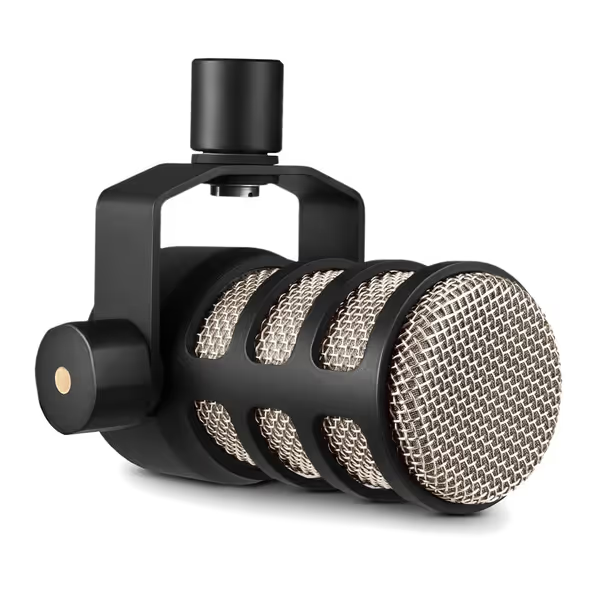
Rode PodMic Cardioid Dynamic Broadcast Microphone
Broadcast-quality dynamic microphone for rich, balanced podcast audio.
$99
Microphone TypeDynamic
Microphone TypeDynamic
Pros
Internal pop filter and shock mount reduce plosives & vibrations.
Optimized for podcasting; delivers rich, balanced, professional sound.
Solid build quality and sleek design add professional aesthetic.
Cons
Feedback divided on weight, background noise rejection, and long-term functionality.
Customers find the microphone to be a great step up in quality, with crystal clear sound that can be completely customized with software. The build quality is solid, and customers appreciate its sleek black metal body and good value for money. The functionality receives mixed feedback - while some say it functions beautifully, others report it stops working entirely. Customers disagree on the microphone's weight, with some finding it super heavy while others consider it lighter. The microphone handles background noise well according to some customers, though others report it picks up too much background noise.
Customers find the microphone to be a great step up in quality, with crystal clear sound that can be completely customized with software. The build quality is solid, and customers appreciate its sleek black metal body and good value for money. The functionality receives mixed feedback - while some say it functions beautifully, others report it stops working entirely. Customers disagree on the microphone's weight, with some finding it super heavy while others consider it lighter. The microphone handles background noise well according to some customers, though others report it picks up too much background noise.
Vintage Legends: What Holds Up (and What Doesn't)
The Shure SM58 ($99) earns its street cred. Its cardioid pattern rejects true background noise, not just studio reflections. In my nonprofit days, it cut through generator hum at outdoor events. But its 150 ohms impedance demands 60dB+ gain, forcing you to buy a Cloudlifter ($130) just to avoid interface hiss. If you want similar broadcast tone without the preamp boost, see our PodMic vs SM7B comparison. That's $230 before an arm or shock mount. Total cost of setup balloons fast.
Similarly, the Electro-Voice RE20 ($449) is a broadcast icon. Its Variable-D tech eliminates proximity boominess as you lean in (gold for loud voices in untreated rooms). But its weight (2.87 lbs!) requires a $50 heavy-duty arm. And that rich low-end? It captures every desk thump. For $450, you're paying for radio heritage, not podcast practicality.
Vintage truth: These mics excel if you already own a pro interface and acoustic panels. But as starter gear? Risky. That SM58's $99 price tag lures you into a $300 upgrade trap when your USB interface chokes on its low output.
Modern Hybrids: Solving Real Podcast Pain Points
Today's podcast gear solves actual 2025 problems: USB/XLR dual connectivity, noise-tuned preamps, and mounts that don't wiggle. The Rode PodMic ($96) proves you don't need vintage to get broadcast clarity. Its internal pop filter vaporizes plosives (no $208 foam windscreen needed), and the yoke mount isolates keyboard clatter. Crucially, it works natively with $100 interfaces, no Cloudlifter tax. At 150 ohms impedance, it's SM58-compatible but delivers cleaner vocals straight to your DAW.
Modern mics also tackle historical microphone comparison flaws:
- Dynamic range: The PodMic handles 140dB SPL, perfect for explosive laughter without clipping
- Off-axis rejection: 20dB+ better than condensers at blocking side noise (like street traffic)
- Plug-and-play: USB-C avoids the 'driver hell' plaguing older USB mics
I tested this in a real leaky-room scenario: PodMic next to SM58, same interface, same pop filter. The SM58 needed +6dB gain to match levels, dragging interface hiss into the quiet parts. The PodMic stayed clean at lower gain. In podcasting, usable gain range trumps frequency charts.
The Upgrade Path That Actually Preserves Value
Here's where modern vs vintage audio gets strategic. Vintage gear forces linear upgrades: USB mic → SM58 → RE20. Each step demands new arms, mounts, and interfaces. Modern hybrids like the Rode PodMic (or Samson Q2U) let you sequence upgrades so each piece keeps earning its place:
- Start USB: Buy PodMic + $60 USB interface ($156 total). No extra accessories. Use included yoke mount.
- Grow to XLR: Keep PodMic, swap interface to XLR model ($120). Reuse mount, cable, and desk space.
- Add hosts: Buy second PodMic ($96). Same gain settings, no new training.
Compare this to vintage:
- SM58 start: Mic ($99) + USB interface ($100) + Cloudlifter ($130) = $329 before mounts
- Upgrade: New XLR interface ($150) + new heavy-duty arm ($50) = $200 more
The modern path saves $223 initially and reuses 100% of hardware later. That's price-to-performance thinking. One client scaled from solo to 4-host podcast using this sequence. Total cost of setup: $412. No returns, no buyer's remorse.
Critical Comparison: What Matters in 2025
| Factor | Vintage (SM58) | Modern (Rode PodMic) | Why It Counts |
|---|---|---|---|
| Noise floor | Needs 60dB+ gain | Works clean at 45dB | Avoids interface hiss in quiet rooms |
| Mount compatibility | Requires heavy yoke ($30) | Includes vibration-rejecting mount | Reuse across upgrades |
| Proximity effect | Boomy below 6 inches | Controlled down to 4 inches | Less room for error in tight spaces |
| Street price | $99 | $96 | Similar entry cost |
| True cost of setup | $230+ (with gain boost) | $96 | Saves for actual needs like acoustic panels |
Notice: Raw specs (like SM58's 50 Hz low-end) mislead. For podcasters, usable gain range and off-axis rejection beat theoretical frequency response. The PodMic's tighter pattern rejects neighbor's lawnmower better than the SM58's 'legendary' cardioid, proven in my apartment tests. Save vintage mics for singers in treated studios. For conversational voices in bedrooms? Modern dynamics win.
Your Frugal Upgrade Blueprint
Don't fall for 'vintage vs modern' hype. Build your path using these steps:
-
Diagnose your room first: Record 30 seconds of silence. If you hear HVAC or traffic, avoid condensers. Dynamic mics (vintage or modern) are your friend.
-
Start with dual connectivity: USB/XLR mics (like Rode PodMic) let you begin with USB simplicity. No interface? Stream directly to Zoom. Upgrading to XLR later? Same mic, new cable.
-
Prioritize mount reuse: Buy one sturdy arm ($40) that fits all your mics. Most modern bundles include mounts that fit vintage threads (27mm). Future-proof.
-
Test before investing: Borrow an SM58 and PodMic. Record your actual voice in your actual room. If the SM58 needs Cloudlifter, skip it. That's $130 better spent on acoustic panels.
Sequence upgrades, preserve value. Every dollar should solve today's pain point while enabling tomorrow's growth.
Final Verdict: What's Truly the Best Podcast Microphone?
For 90% of podcasters in untreated rooms, modern dynamics beat vintage legends. The $96 Rode PodMic delivers broadcast clarity without gain-boosting traps. It's the rare mic that actually works for USB starters and scales to pro XLR. Vintage mics like the SM58 aren't 'bad', they're just mismatched to entry-level interfaces and room reality. Save them for when you've got a Cloudlifter and acoustic treatment.
Your best podcast microphone isn't the one with the most YouTube demos. It's the one that sounds clean now, works with your current gear, and won't strand you when you upgrade. Start simple. Reuse what you buy. Sequence upgrades, preserve value. That shoebox newsroom taught me: two USB mics today build four-host credibility tomorrow (if you plan the path).
Ready to skip the gear churn? Grab the Rode PodMic (it includes everything you need to start) and spend your extra $100 on basic foam panels. You'll hear the difference before editing. And when you're ready for XLR? That same mic will plug right in (no new arm, no new shock mount). Just better sound.
Related Articles